Charles Bridge
Medieval stone arch bridge crossing the Vltava in Prague.

via Wikipedia: Charles Bridge · see source
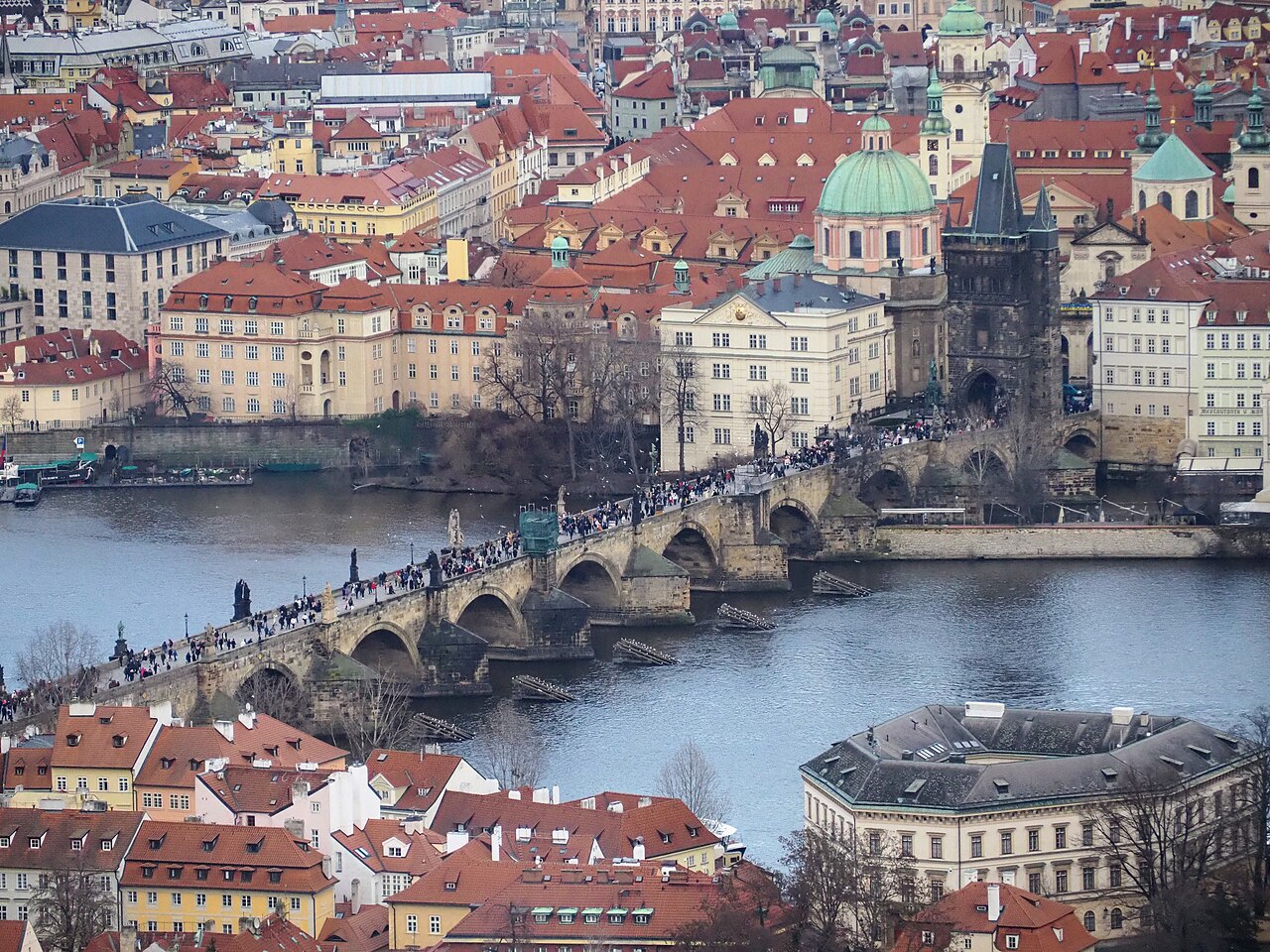
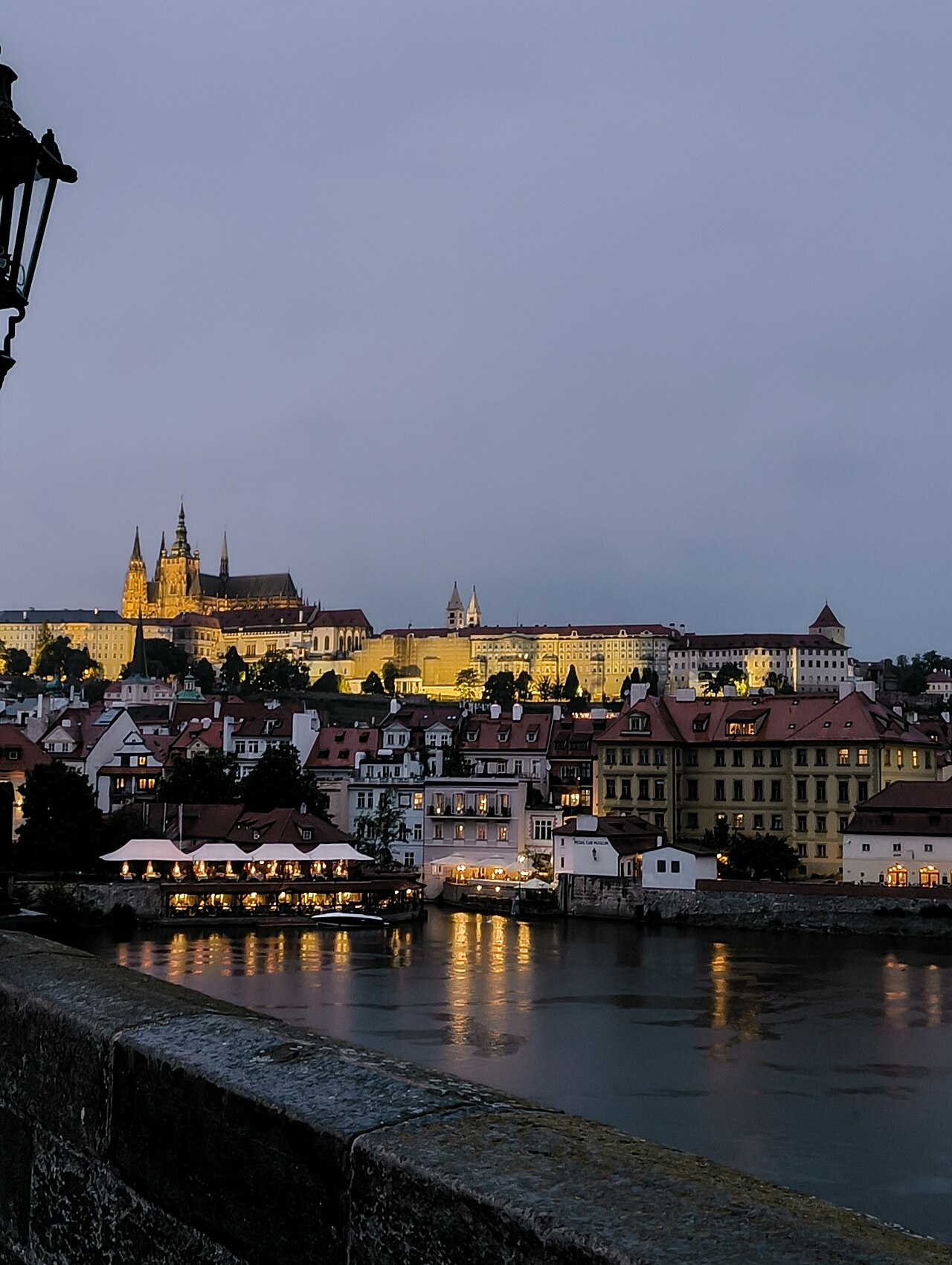
Charles Bridge is a medieval stone arch bridge crossing the Vltava river in Prague, Czech Republic. Construction began in 1357 under King Charles IV and finished in the early 15th century, replacing the earlier Judith Bridge damaged by a flood in 1342. Originally called Stone Bridge or Prague Bridge, it has been known as Charles Bridge since 1870. As the only means of crossing the river until 1841, it was the most important connection between Prague Castle and the Old Town, making Prague a key trade route between Eastern and Western Europe.
- length
- 516 metres (1,693 ft)
- width
- nearly 10 metres (33 ft)
- arches
- 16
- statues
- 30 statues and statuaries, mostly Baroque
- construction_start
- 1357
- construction_end
- early 15th century (completed 1402 per legend)
- location
- Prague, Czech Republic
Verified Timeline
Lore & Background
Czech legend holds that construction began at 5:31am on 9 July 1357, a time chosen by Charles IV for its palindromic properties (1357 9/7 5:31), believed to imbue the bridge with strength. The bridge was completed in 1402. It suffered a flood in 1432 damaging three pillars, and in 1496 the third arch collapsed after a pillar was undermined by water, with repairs finished in 1503. In 1621, after the Battle of White Mountain, the heads of 27 executed revolt leaders were displayed on the Old Town Bridge Tower as a deterrent. During the Thirty Years' War in 1648, Swedes occupied the west bank and fighting on the bridge severely damaged one side of the Old Town bridge tower, removing most Gothic decorations.
Reader's Guide
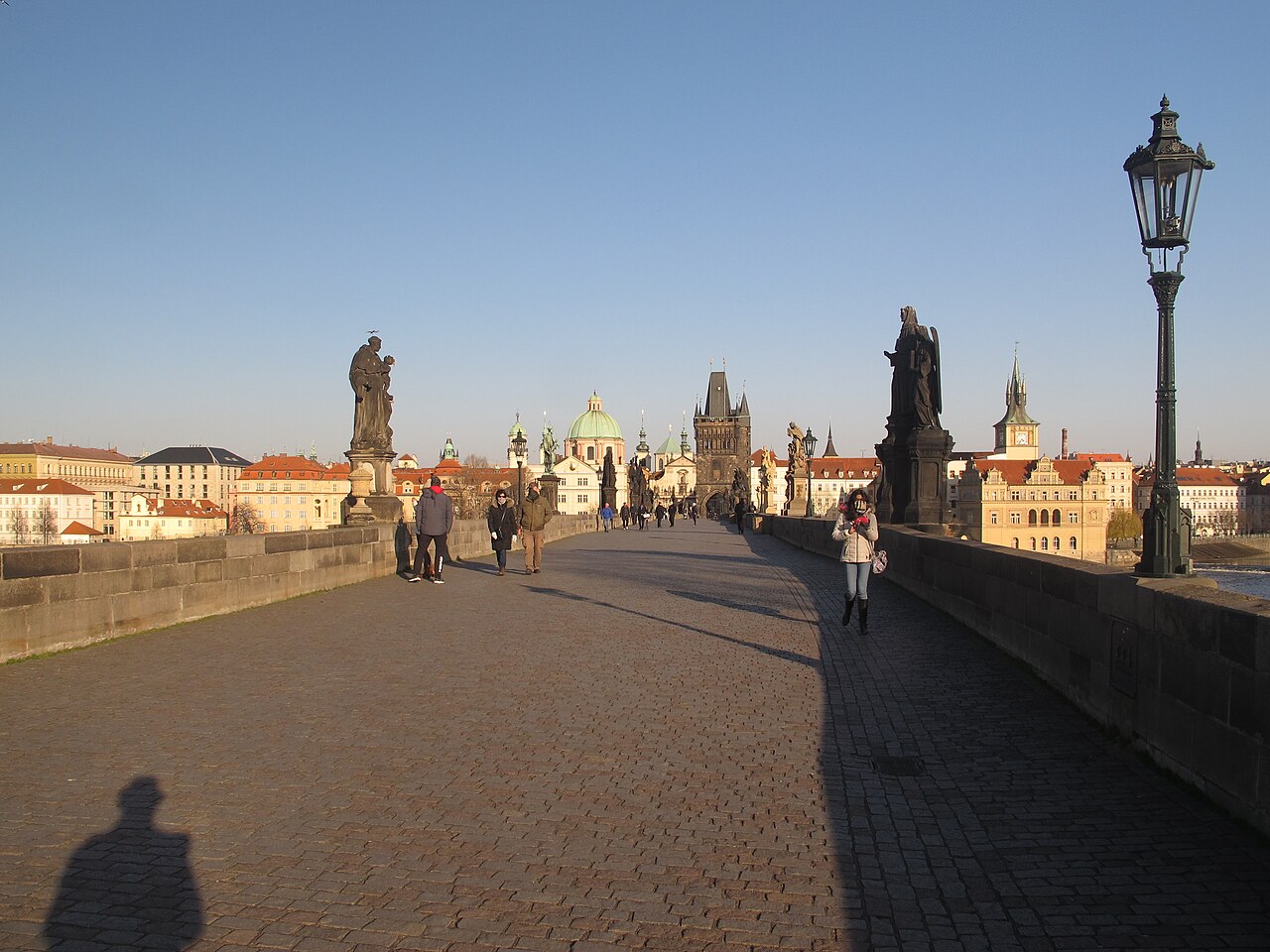
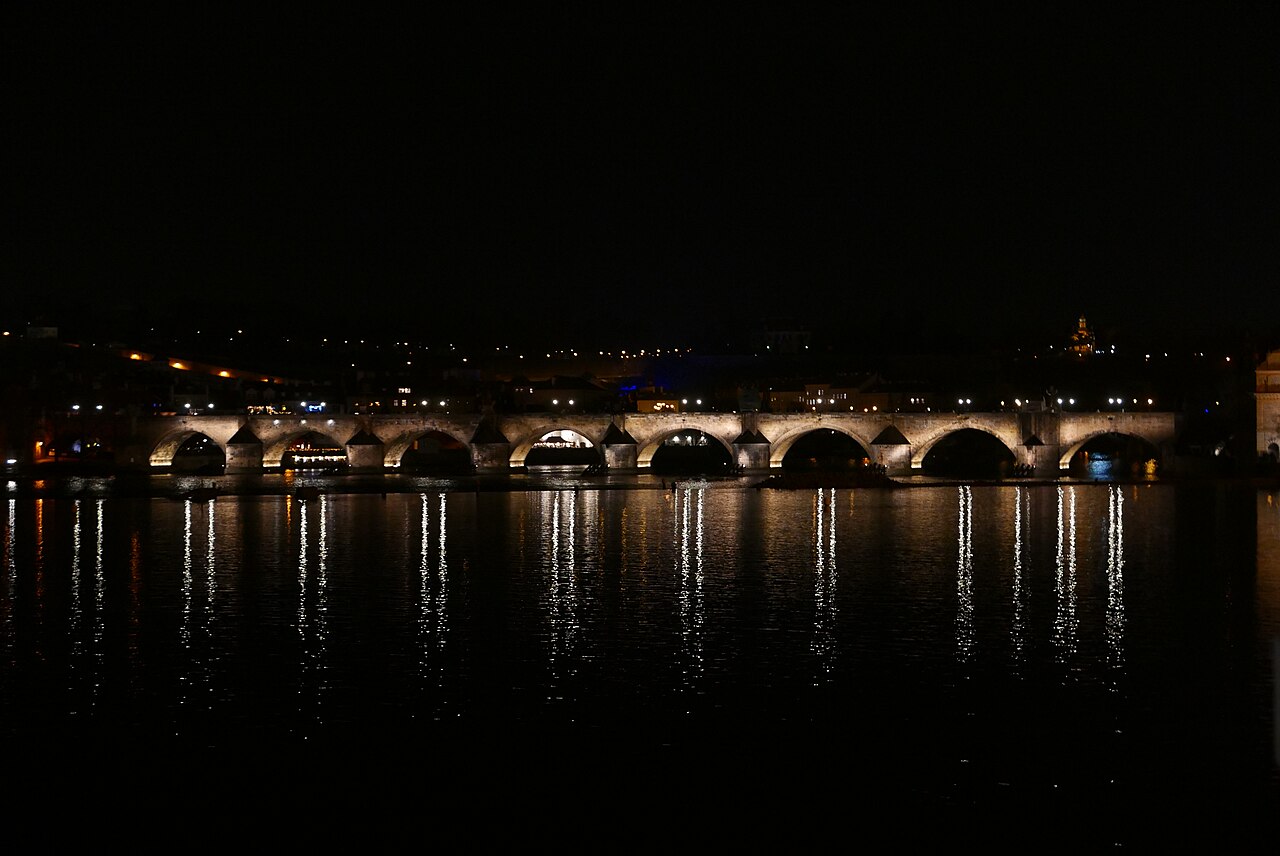
Charles Bridge served as the sole river crossing in Prague until 1841, making it vital for trade and the coronation route of Bohemian kings. Its 16 arches, inspired by the Stone Bridge in Regensburg, are shielded by ice guards, and three bridge towers protect it. The alley of 30 Baroque statues, erected mostly between 1683 and 1714, was created by prominent sculptors including Matthias Braun and the Brokoff family; all statues have been replaced by replicas since 1965, with originals in the National Museum's Lapidarium. The bridge has endured numerous floods, including a disastrous one in 1890 that tore down three arches and two pillars, requiring two years of repairs. A major reconstruction from 1965 to 1978 removed vehicular traffic, making it pedestrian-only. A twenty-year restoration process began in late 2019, expected to cost 45–60 million CZK, but a 2008–2010 restoration was criticized by conservation professionals and UNESCO for inadequate conservation advice. The bridge is monitored by 16 cameras and an electronic perimeter-detection system.
Did You Know?
- Czech legend says construction began at 5:31am on 9 July 1357 because Charles IV believed the palindrome 1357 9/7 5:31 would give the bridge extra strength.
- The bridge was originally called Stone Bridge or Prague Bridge; it has been referred to as Charles Bridge only since 1870.
- In 1621, the severed heads of 27 executed revolt leaders were displayed on the Old Town Bridge Tower as a deterrent.
- During the 1890 flood, two statues by Ferdinand Brokoff—St. Ignatius of Loyola and St. Xavier—fell into the river when the fifth pillar collapsed.
- A 2008–2010 restoration was criticized by UNESCO's World Heritage Committee for being carried out without adequate conservation advice on materials and techniques.
Origins & Construction
Charles Bridge rose from the waters of the Vltava in 1357, commissioned by King Charles IV to replace the aging Judith Bridge, which had been crippled by a devastating flood in 1342. Czech tradition holds that the first stone was set at precisely 5:31 in the morning on 9 July 1357, a moment Charles IV, a devoted numerologist, chose because the digits formed a palindrome (1357 9/7 5:31) that he believed would fortify the structure. Drawing on the design of the Stone Bridge in Regensburg, the builders fashioned a bow bridge of sixteen arches, each flanked by ice guards to deflect floating debris. The span stretches 516 metres and measures nearly 10 metres across. Three fortified towers guard its ends—two on the Lesser Quarter side, including the Malá Strana Bridge Tower, and one on the Old Town side. What began as a royal project in the mid-fourteenth century was not fully completed until 1402, a full forty-five years later, and for centuries carried the simpler names Stone Bridge or Prague Bridge before the world came to know it as Charles Bridge.
Strategic & Historical Significance
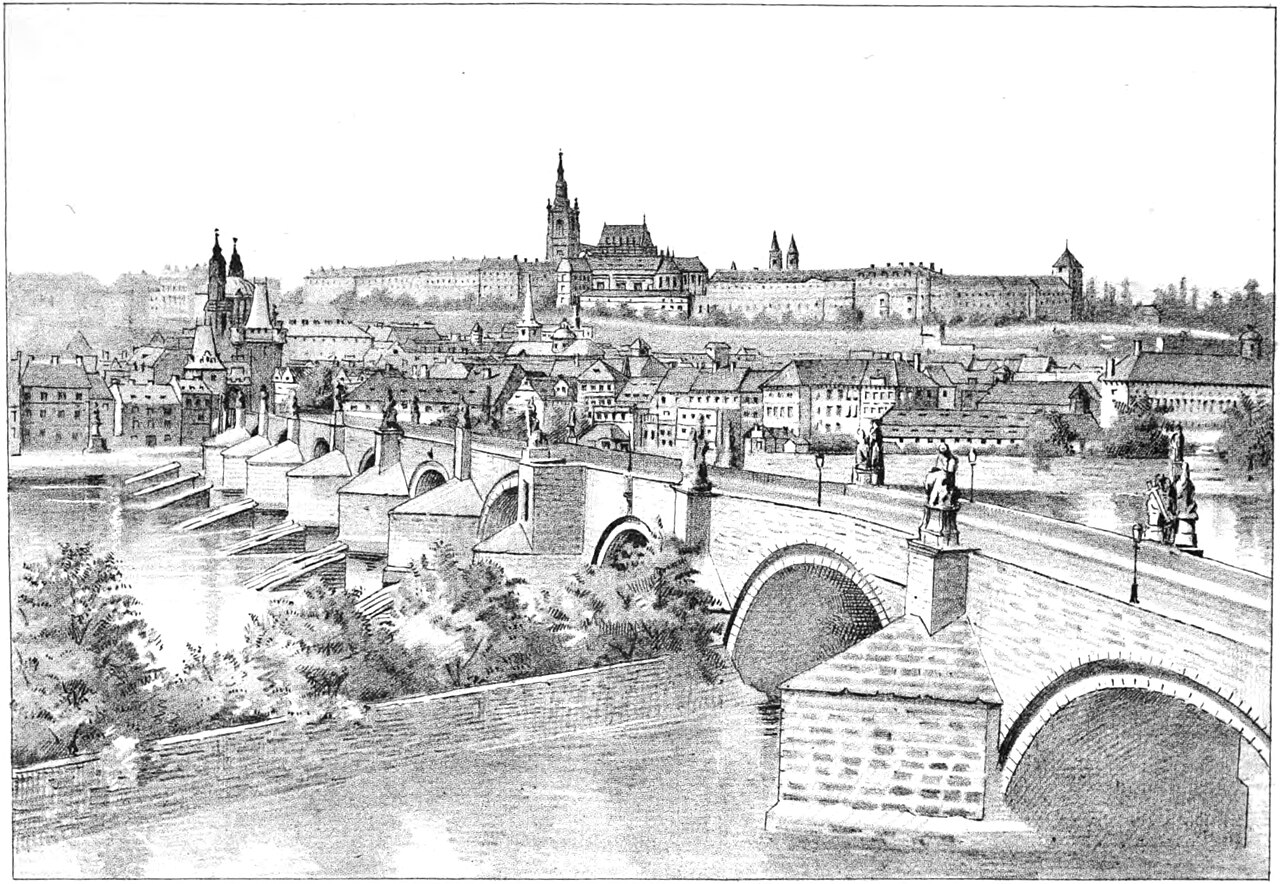
Until 1841, Charles Bridge was the sole crossing over the Vltava, making it the indispensable artery linking Prague Castle to the Old Town and surrounding districts. This monopoly on river crossing elevated Prague's role as a vital trade corridor connecting Eastern and Western Europe, and the bridge sat squarely on the historic coronation route of the Bohemian kings. Yet its strategic importance also made it a stage for violence. In June 1621, one year after the Battle of White Mountain, the severed heads of twenty-seven leaders of the anti-Habsburg revolt were displayed on the Old Town Bridge Tower as a grim warning against further Czech resistance. During the Thirty Years' War's final phase in 1648, Swedish forces holding the west bank clashed with defenders directly on the bridge, battering the river-facing side of the Old Town tower so severely that nearly all its Gothic ornamentation had to be stripped away. Even in the revolutionary upheaval of 1848, the bridge endured cannon fire, though the structure itself survived unscathed while several statues took damage.
Disasters & Resilience
The Vltava has repeatedly tested Charles Bridge's endurance. A 1432 flood weakened three pillars, and in 1496 the third arch from the Old Town side collapsed when its supporting pillar was undermined by the current; repairs stretched until 1503. The 1784 flood damaged five pillars and forced a prolonged restriction of traffic. The most catastrophic event came in September 1890, when thousands of upstream rafts and logs piled against the span, tearing down three arches and collapsing two pillars. Two Ferdinand Brokoff statues—St. Ignatius of Loyola and St. Xavier—plummeted into the river with the fifth pillar. The bridge remained closed for two years and cost 665,000 crowns to repair before reopening in November 1892. The 2002 floods caused only minor harm, but they galvanized public support for deeper structural work. A twenty-year programme of inspections, restoration, and repairs launched in late 2019 is projected to cost between 45 and 60 million CZK, ensuring the medieval span endures for another century.
Appearance & Transformation
Today's Charles Bridge presents a baroque silhouette that is, in a sense, entirely a copy. The continuous row of thirty statues and statuaries lining the pillars was installed in the late seventeenth and early eighteenth centuries, but every original has since been replaced by a replica. The three bridge towers—two guarding the Lesser Quarter approach and one on the Old Town side—underwent thorough reconstruction between 1874 and 1883. The bridge's identity evolved alongside Prague's transport: omnibus lines crossed in the 1870s (the name Charles Bridge became official that decade), followed by a horse tram, an electric tram from 1905, and buses by 1908. A major capital repair between 1965 and 1978, costing 50 million crowns, stabilized the pillars, replaced broken stonework, removed the asphalt surface, and permanently excluded all vehicular traffic, transforming the span into a pedestrian-only thoroughfare. Further targeted work on pillars 8 and 9 on the Malá Strana side was carried out from 2008 to 2010, closing sections of the bridge without halting foot traffic entirely.
Common Misconceptions (Editorial)
- Some believe the bridge was always called Charles Bridge, but it was originally known as Stone Bridge or Prague Bridge and has only been referred to as Charles Bridge since 1870.
- It is commonly thought that construction began and ended in the 1350s, but while it started in 1357 under King Charles IV, it was not completed until the early 15th century (specifically 1402 per legend).
- A misconception holds that the bridge’s 30 statues are original medieval works, but most are Baroque statues and statuaries added later, and two by Ferdinand Brokoff were lost during the 1890 flood.
Why It Matters (Editorial)
Charles Bridge endures not only as a feat of medieval engineering but as a living symbol of Prague’s resilience through centuries of war, flood, and political upheaval. Its layered history—from a palindromic foundation myth to a site of executions and battles—reminds us that great structures often bear witness to both human ambition and conflict, making them far more than just stone and arches.
Gallery
Frequently Asked Questions
What is Charles Bridge?
Charles Bridge is a 16-arch medieval stone bridge spanning the Vltava River in Prague, Czech Republic. Stretching 516 metres with a width of nearly 10 metres, it is one of the city's most iconic landmarks.
When was Charles Bridge built and by whom?
King Charles IV commissioned construction in 1357, and the project was completed in the early 15th century—tradition places the finishing touch in 1402. It replaced the older Judith Bridge, which had been destroyed by a flood in 1342.
Why is it called Charles Bridge if it wasn't always that name?
For centuries the structure was simply known as the Stone Bridge or the Prague Bridge. The 'Charles' name was only officially adopted in 1870, long after the king who ordered its construction had passed.
What role did Charles Bridge play in Prague's history?
Serving as the sole crossing of the Vltava until 1841, it linked Prague Castle to the Old Town and turned the city into a critical trade corridor between Eastern and Western Europe.
What are the statues on Charles Bridge?
The bridge is lined with 30 statues and statuaries, the majority of which date to the Baroque period. They have become one of the most photographed and beloved features of the structure.
More in Great Bridges 1-22
Spotted an error? Know more?
This is a living reference — every entry is fact-audited, and reader corrections feed straight into our audit queue. Suggest an edit · See this site's audit record