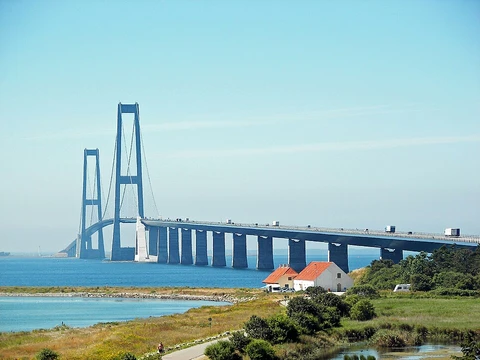
The Rialto Bridge
Oldest bridge spanning Venice's Grand Canal, rebuilt in stone.

Didier Descouens · Public domain
The Rialto Bridge is the oldest of the four bridges spanning the Grand Canal in Venice, Italy.
- location
- Venice, Italy
- type
- Stone arch bridge
- architect
- Antonio da Ponte
- crosses
- Grand Canal
- connects
- San Marco and San Polo districts
Lore & Background
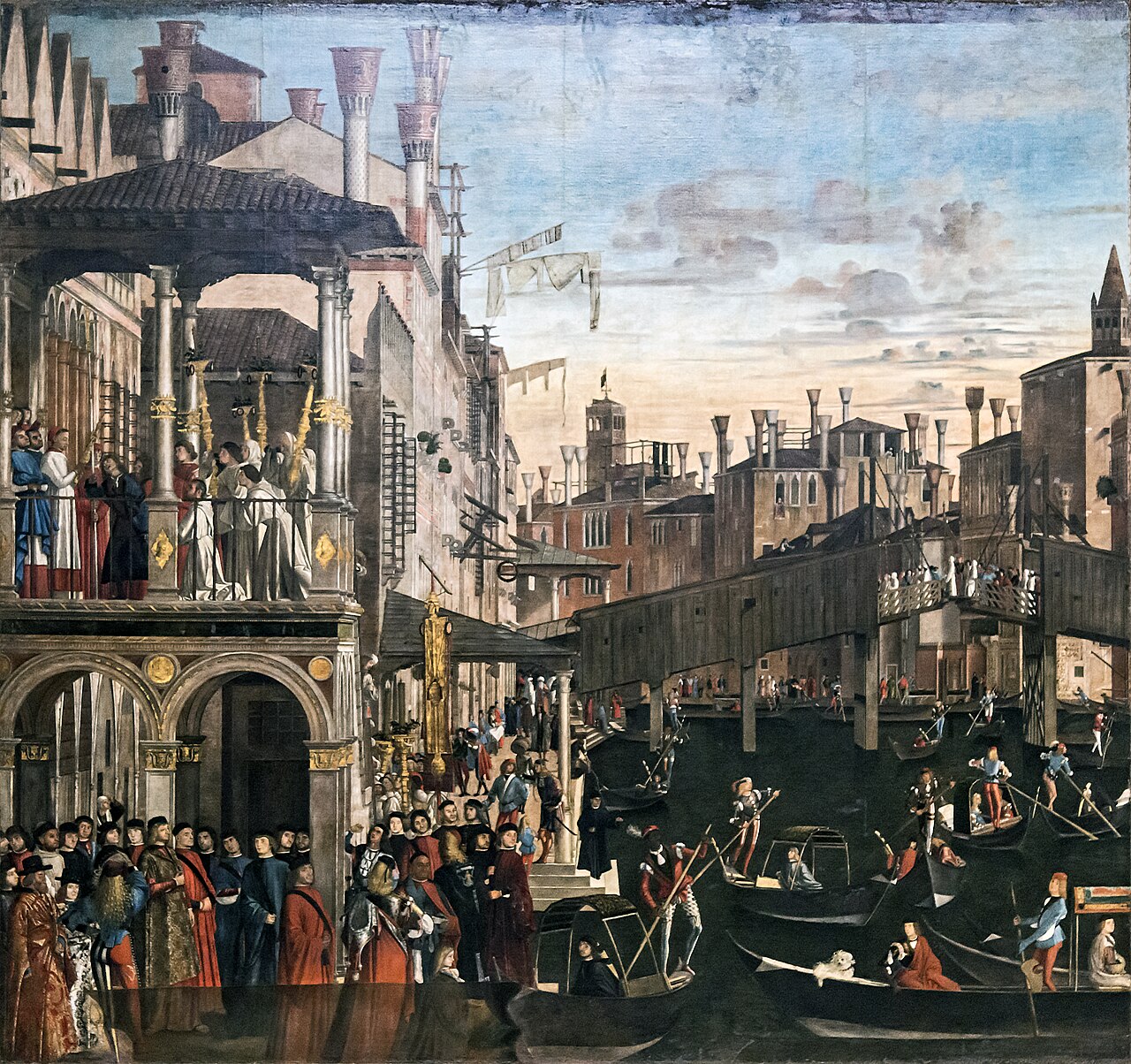
During the first half of the 15th century, two rows of shops were built along the sides, with rents helping maintain the bridge.
Reader's Guide
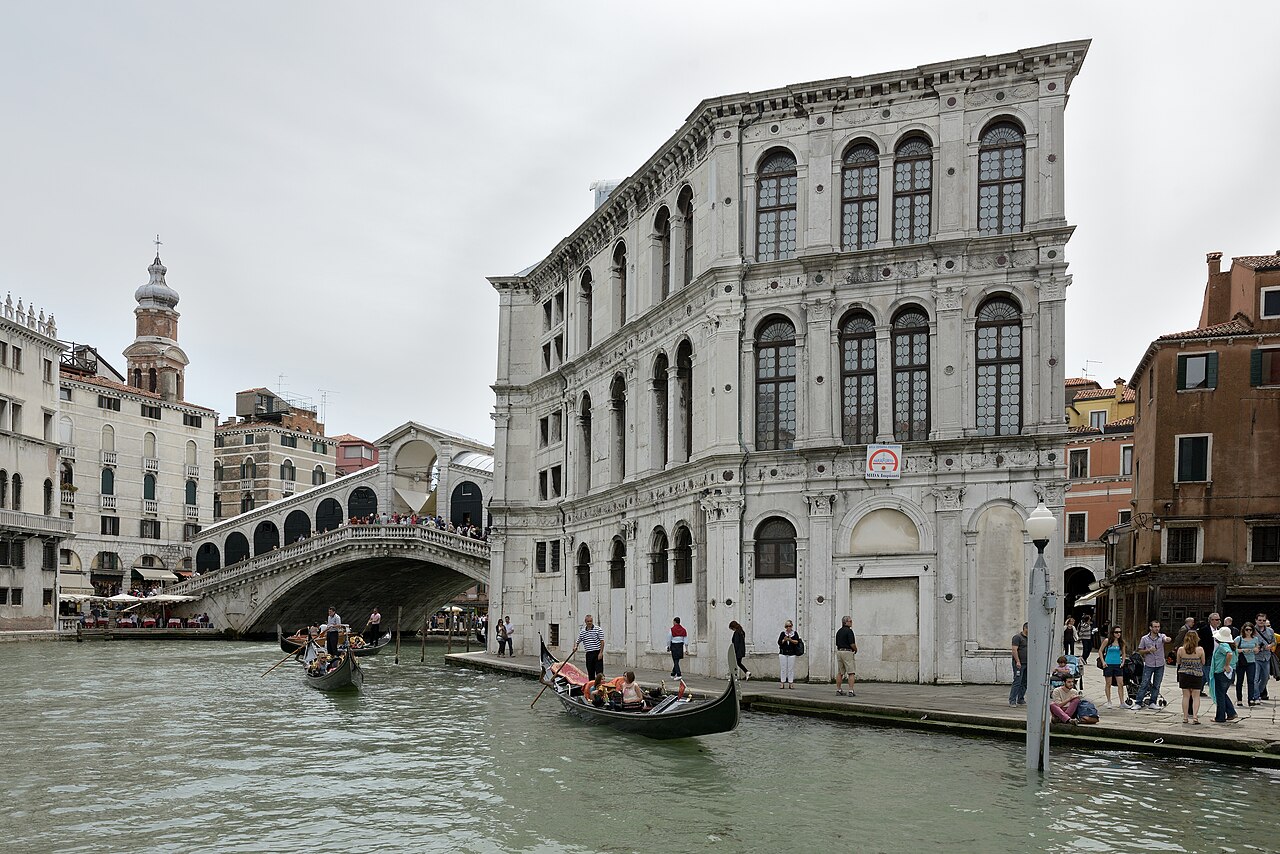
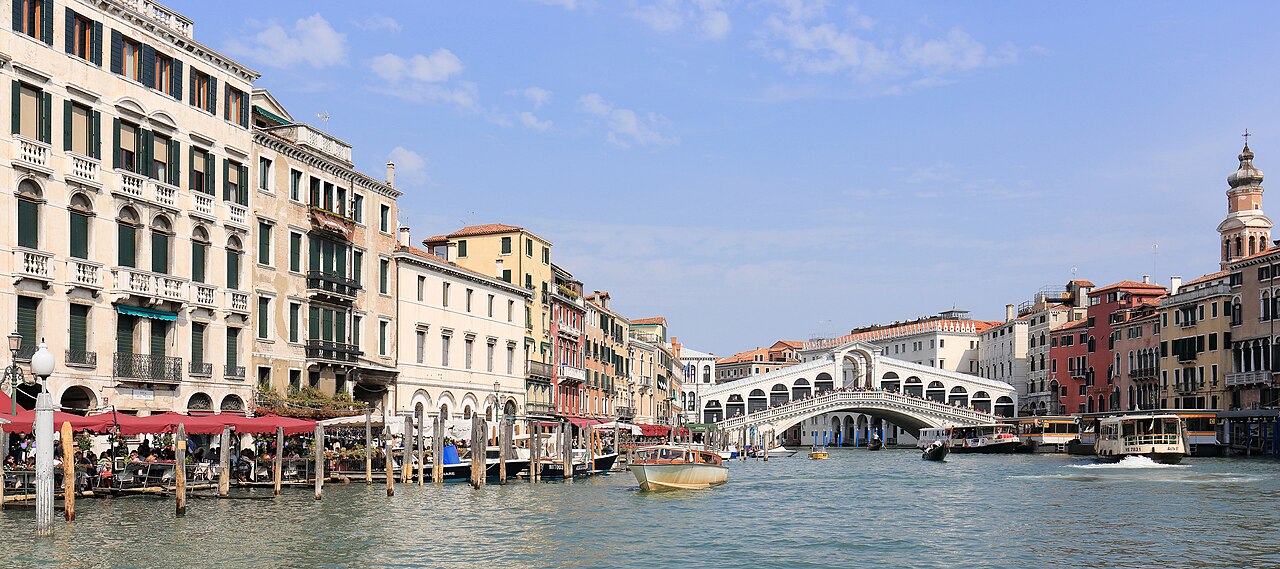
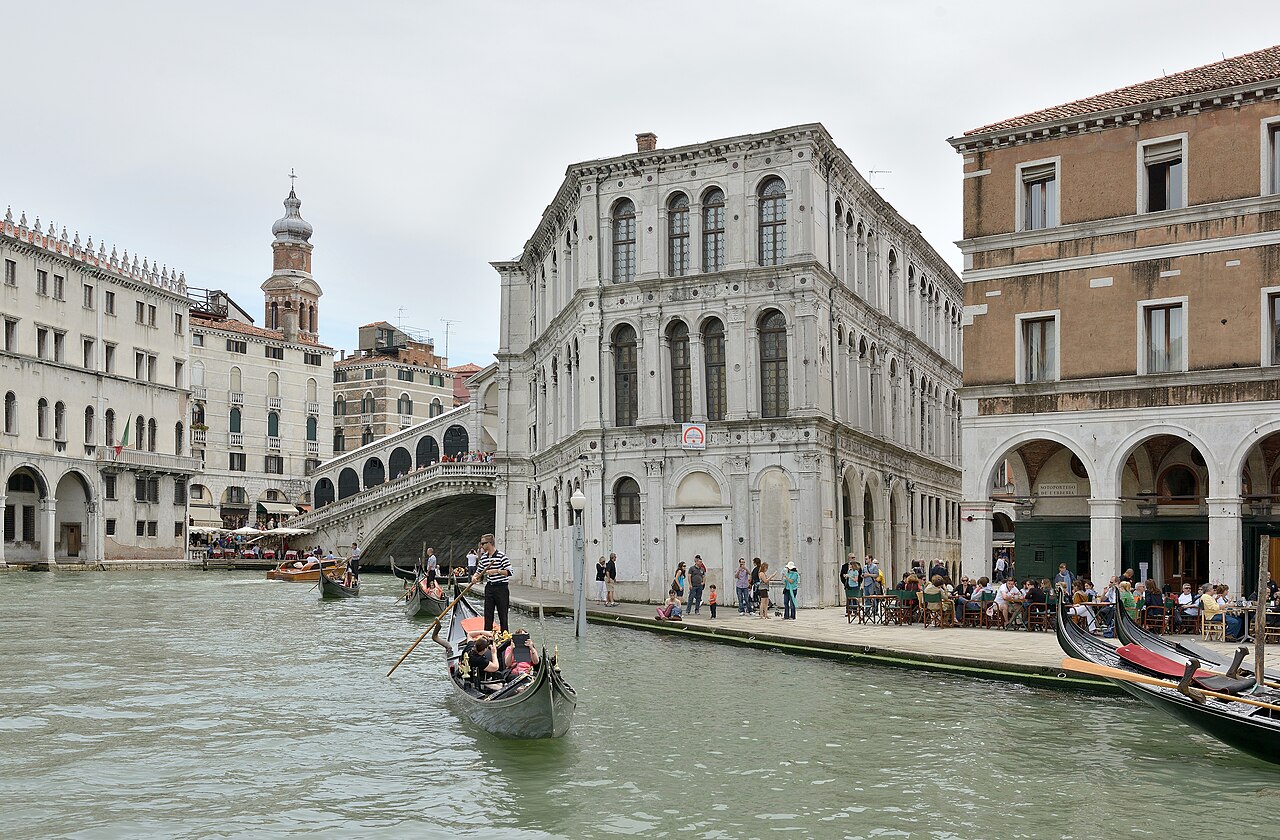
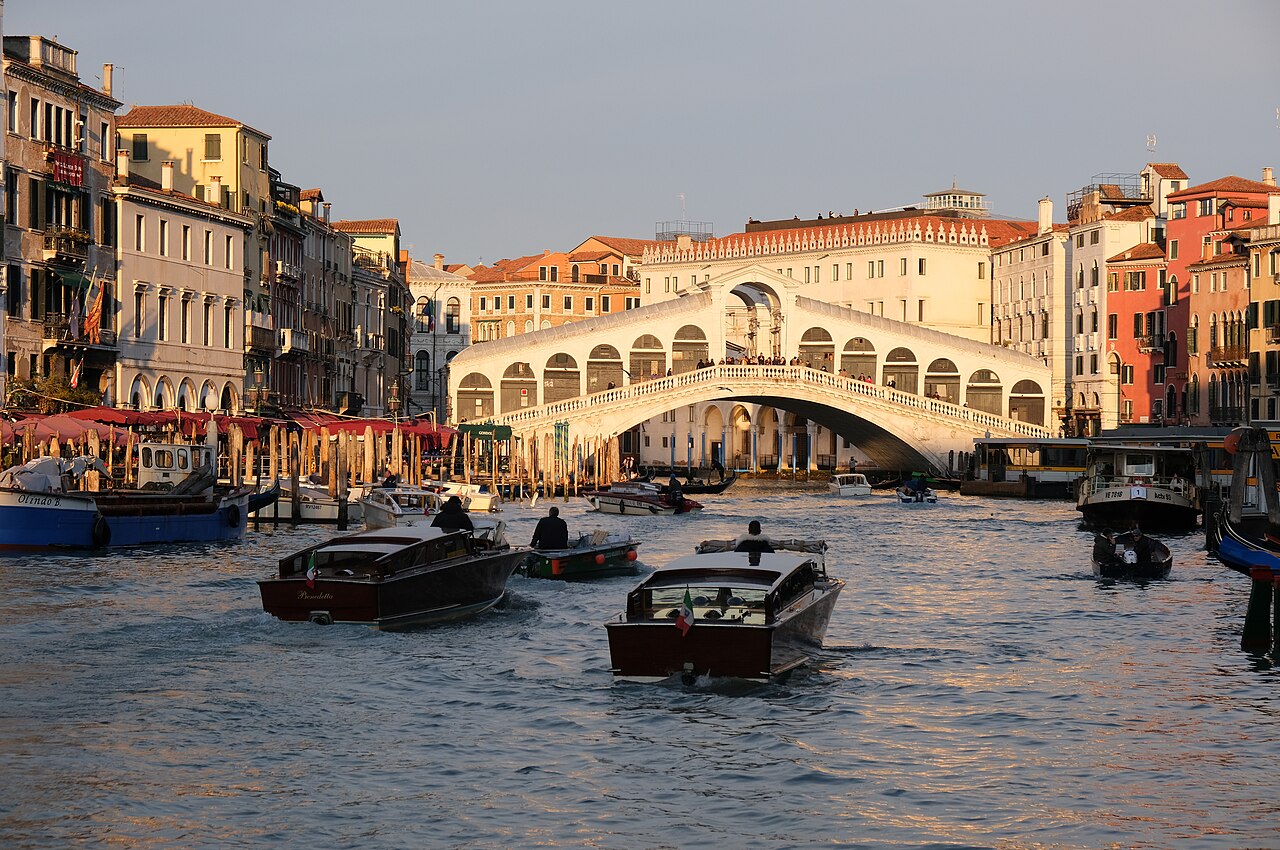
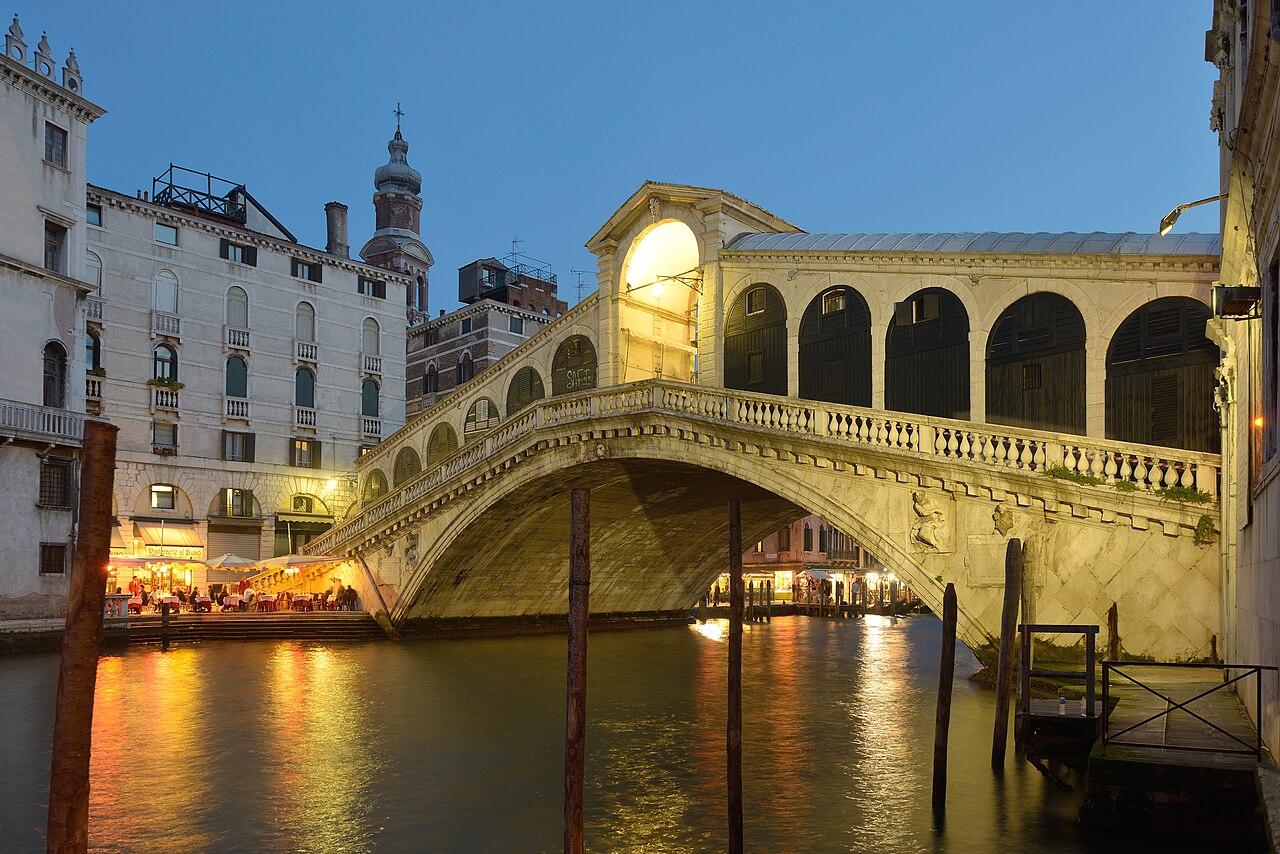
The Rialto Bridge is the oldest of the four bridges crossing the Grand Canal in Venice, Italy. The bridge's single-span design was considered so audacious that architect Vincenzo Scamozzi predicted future ruin, but it has defied critics to become an architectural icon and top tourist attraction. Two ramps lead up to a central portico, with covered ramps carrying rows of shops on either side. The bridge connects the districts of San Marco and San Polo, near the historic Rialto market. The bridge appears in Robert Browning's poem 'A Toccata of Galuppi's' as 'Shylock's bridge,' referencing a scene in Shakespeare's The Merchant of Venice.
Did You Know?
- Architect Vincenzo Scamozzi predicted the stone bridge would fall into ruin.
- The bridge is called 'Shylock's bridge' in Robert Browning's poem 'A Toccata of Galuppi's'.
The Pulteney Inheritance and the Need for a Crossing
Named for Frances Pulteney, the bridge traces its existence to a remarkable chain of inheritances. Frances, the third daughter of MP and government official Daniel Pulteney, was a first cousin once removed of William Pulteney, 1st Earl of Bath. She and her husband, Sir William Pulteney—a Scottish lawyer and member of Parliament—gained the rural Bathwick estate that year. The practical problem was immediate: the land sat across the River Avon from Bath and could only be reached by ferry. Sir William envisioned transforming the area into a new town serving as a suburb to the historic city, but that ambition demanded a proper river crossing. The bridge became the essential first step in that vision. The Pulteneys' imprint on Bathwick endures in its street names: Great Pulteney Street, Henrietta Street, and Laura Place, the latter two honouring their daughter Henrietta Laura Johnstone.
Competing Visions and Adam's Ambitious Design
The bridge's design journey reveals a fascinating interplay of rival proposals. Neither project broke ground before winter halted pillar work. Robert Adam envisioned an elegant structure lined with shops, clearly inspired by the Ponte Vecchio in Florence and the Rialto in Venice, which he had likely witnessed during travel. His design drew closer to Andrea Palladio's rejected Rialto proposal than to the actual built structure. A critical practical detail: Adam widened the crossing to 15 metres, overcoming the local council's objection that Paty's 9.1-metre span was too narrow. Reed and Lowther handled the masonry of the lower structure, while Singers and Lankeshere built the shops. Adam's original drawings survive at Sir John Soane's Museum in London.
Floods, Alterations, and the Long Fight for Preservation
Pulteney Bridge has never truly rested in its original form. Thomas Telford proposed replacing the whole thing with a single-span cast iron bridge, but John Pinch senior, surveyor to the Pulteney estate, instead rebuilt it in a less grand iteration of Adam's design. Throughout the nineteenth century, shopkeepers modified their premises freely, adding cantilevered extensions over the river and even painting advertisements on the bridge's exterior.
A Singular Architecture and a Living Thoroughfare
Standing 45 metres long and 18 metres wide, Pulteney Bridge occupies a singular place in the global architectural landscape. It is one of only four bridges worldwide to feature shops spanning the full width on both sides—the others being Ponte Vecchio in Florence, the Rialto in Venice, and Krämerbrücke in Erfurt, Germany. The structure rests on three equal segmental arches, above which runs a narrow street flanked by two continuous rows of Palladian-style shops. The north side carries cantilevered rear extensions, giving that façade a noticeably asymmetrical character compared to the south. Despite its tourist appeal and proximity to Bath's World Heritage Site, renowned for Georgian architecture, the bridge remains a working thoroughfare. Ironically, the bridge now generates significant revenue for Bath and North East Somerset council, not merely through tourism but as the city's most heavily fined bus lane. The much-photographed bridge and its weir below sit close to the city centre, anchoring one of Bath's most recognisable vistas.
Common Misconceptions (Editorial)
It is sometimes assumed that the Rialto Bridge is the only bridge crossing the Grand Canal, but in fact it is the oldest of four bridges that span the canal. Another common misconception is that the bridge has always been made of stone; however, the stone bridge was designed by Antonio da Ponte and completed later, with shops added along its sides during the first half of the 15th century.
Why It Matters (Editorial)
The Rialto Bridge endures not only as a vital pedestrian link between the San Marco and San Polo districts, but as a symbol of Venetian ingenuity and resilience. Its centuries of service, from housing shops to defying predicted ruin, reflect how functional design can become an enduring cultural landmark.
Gallery
Frequently Asked Questions
What is The Rialto Bridge?
It is the oldest of the four bridges that cross Venice's Grand Canal, linking the San Marco and San Polo districts. Today it stands as a single-arch stone structure and one of the city's most visited landmarks.
What type of bridge is The Rialto Bridge?
It is a single-arch masonry bridge spanning the Grand Canal in Venice, Italy. Its heavy stone construction sets it apart from the other, slimmer bridges that cross the same waterway.
Why is The Rialto Bridge important?
As the oldest and most substantial crossing over the Grand Canal, it has functioned as a central commercial and social hub for Venice for centuries. It remains a major tourist attraction and a defining symbol of the city.
More in Great Bridges 1-22
Spotted an error? Know more?
This is a living reference — every entry is fact-audited, and reader corrections feed straight into our audit queue. Suggest an edit · See this site's audit record